

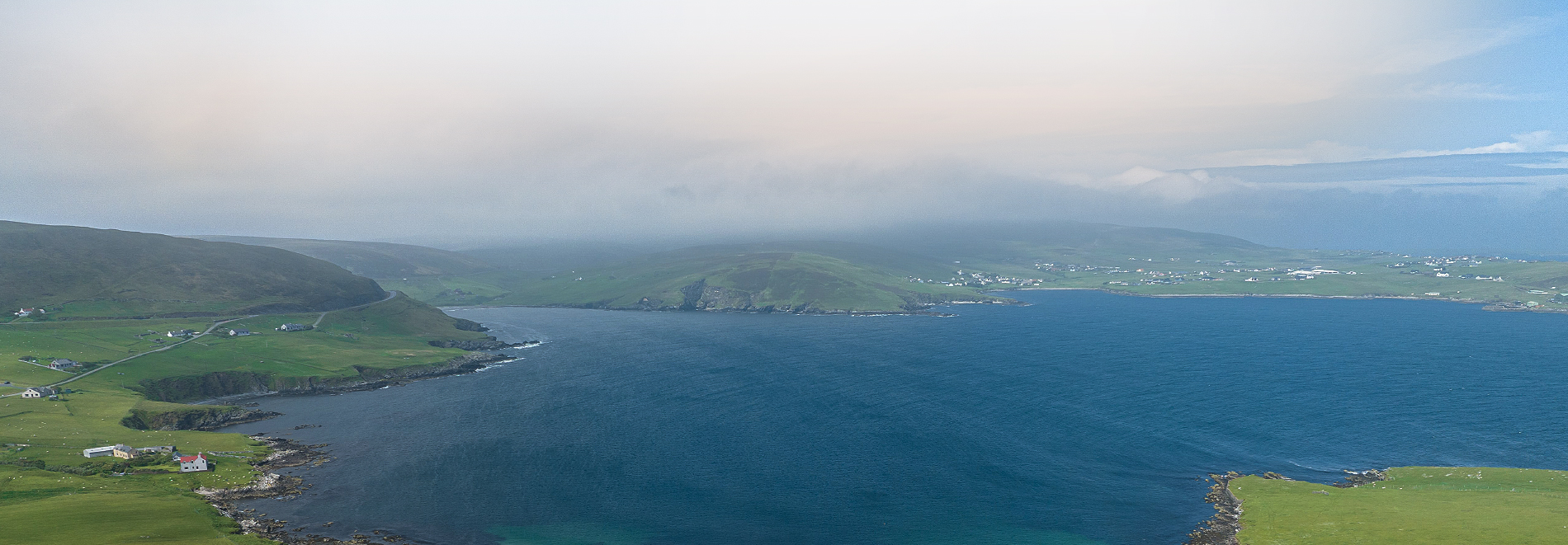
Katie Deyell in her 80’s walking on the west side of Shetland, photo taken in 1950’s. Many thanks to the Deyell family for the use of the photo. Deyell family copyright
You may have seen I did a talk last month. This was the power point I wrote for the Dornoch Fibre Festival back in March of this year. A great little 2 day festival in the centre of Dornoch. Such a variety of classes from felting, quilting, fair isle, crochet and Dorset buttons to name but a few.
The vendors were very varied but I was most delighted to see they had a bring and buy stall where I found some used 3mm steel long DPNs plus some 30cm 3mm aluminium DPNs which are hard to come by. I felt like I’d found the pot of gold at the end of the rainbow! Why would I want these particular needles? Well I knit with long DPNs and a knitting belt 90% of the time the most common length of long DPN is 40cm which can be a bit long if you are knitting a hat or gloves or sitting close to someone while you are knitting. You are apt to stab them! The steel needles are very smooth and the stitches just glide along them. I think I’ll need to knit little and often with them though as they are much heavier and I feel it in my wrists sometimes.
Anyway back to my talk …. Since it was all ready hidden away on my hard drive I thought there might be a few Shetlanders interested to hear it or visitors to Shetland who might want to hear a bit about Shetland’s fair isle knitting history. So where did I start? I thought the late 1800’s was a good place as I have ancestor information from around that time onwards, plus several major changes for knitters in Shetland come about in the early 1900s.
People were generally poor in Shetland in the late 1800s and were very much living a hand to mouth existence. Knitting was necessary to barter with at the local shop for household goods such as tea, flour, fabric or soap. Older children were sent, to walk with the goods several miles to the local shop, either because the adults had children to look after or other chores to do but it was also harder for a shopkeeper to turn away knitwear if they already had plenty when it was being brought by a child. Rarely did money ever change hands so knitters never knew what they were being “paid” This was known as the truck system.
At this time Shetland knitters were knitting plain garments like socks, stockings, spencers, vests and some were also knitting fine lace shawls, scarves and christening gowns which were made popular by Queen Victoria. They had to knit what was in demand and knit as quickly and as finely as they could as finished pieces were inspected before they were accepted for barter.
If you’ve enjoyed my blog I would love it if you could give me a share or leave a comment below.
If you’ve been on one of my classes I would love to hear any comments about your experience or suggestions you may have. Either send me an email, or post a review
on my Facebook page.



